
Growing up in the age of social media has had its ups and downs, but there was one app that never failed to keep me entertained when I was a kid, and that was Vine. Established in 2013, Vine was a mobile app under the ownership of Twitter, where people could create 6-second videos and share them with the world through the app but also through Twitter, Facebook, and other apps. Vine was one of the first, if not the first, app for short-form video content which set pace for other apps such as Musical.ly, known as TikTok now, or even specialized content inside apps such as Instagram Reels, YouTube Shorts and Snapchat Spotlight. Or as I would say, Vine walked so Tiktok could run.

This week’s lecture talked about the rise of Silicon Valley, known to be a tech hub for being the hotspot of thousands of technology companies and startups. It is also known for its grand innovative setting, giving a platform to entrepreneurs, engineers and tech creatives. In many ways, Vine felt like that for many people; it was a place where people met to create and influence others. Vine’s impact was so massive, many celebrities and artists that we know now gained their recognition through it; Shawn Mendes, Logan and Jake Paul, Lele Pons, Liza Koshy, David Dobrik and many more.

However, with the passing of time, and the creation of content apps such as TikTok and Dubsmash, many users of Vine started migrating to these apps. Vine’s content creators also started realizing that they could upload their content on Instagram and gain greater monetization for their work, and also make longer content (15 seconds at first, and later on Reels began allowing 90 seconds). Even with it being the fastest growing app in 2013, by 2015-2016 the app had lost almost 80% of its users. On October 27th, 2016, the company shared that their app would be discontinued, and by 2017 Vine had been officially shut down and removed from all app stores. Rest in peace, Vine.
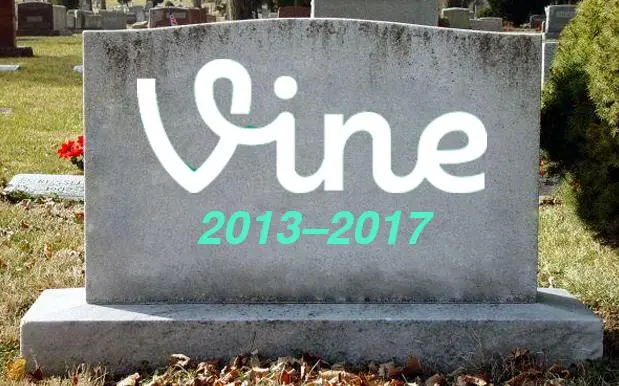
Now, what I spent a good amount of time thinking about, that kept me questioning all of the internet’s inner-workings for a good while was: Where in the world is Vine?
More specifically, where did Vine go? Of course it was shut down and discontinued, but what does that truly mean? Where does all the that was content made, go? Does data really disappear from the face of this earth that easily? These questions also began bubbling in my mind when I found out that in 2017, Twitter created an online archive for millions of Vines, making me realize that all of that data was still retrievable. So I did a deep dive into the “interwebs” to figure this out, and today I will tell you guys what I learned.
Summarizing it tragically, people are very much correct when they say that nothing is really deleted off of the internet once you’ve placed it there. Although you might’ve deleted content from an app, or deleted files/documents from your computer, it doesn’t truly mean that they are gone. Weston Technology Solutions nicely puts it by saying that “Basically, it’s like if you removed a page of the table of contents of a reference book. The data is still in the book, it’s just difficult to find.” When you delete an app from your phone, all the data you gave to that app might not be in your phone anymore, but it is still stored in the company’s database.
But if I deleted that data from my phone, shouldn’t it also delete from the company’s database? Technically no, since you agreed to give this data to the company when you accepted their long and unreadable terms and conditions. Most of the times these companies keep this data because they might need this information to recover your account in the future, also to understand users and their improve services, or just due to laws that require them to retain data. So, although Vine was shutdown, its Twitter’s data centers still kept all that data that it had because it owned the app. This then helped them retrieve all those old videos and place them into the archive made in 2017. This is also why sometimes it doesn’t take too much to retrieve data that you might’ve deleted or lost in the past with a recovery software, since it usually is still in some data cloud somewhere that can be easily accessed. A little terrifying if you ask me….
However, there are ways of making your data disappear without it being recovered: by encrypting it. You should probably question that one person you know who knows all about encrypting your data… why do they need to delete your data so bad? Anyways, as Google Cloud explains it, “Encryption is used to protect data from being stolen, changed, or compromised and works by scrambling data into a secret code that can only be unlocked with a unique digital key.” Basically, if someone tries to recover this data, they will only recover random codes.

Ultimately, it is always important to keep notice on what you agree upon when you allow apps and servers to get your data. Because even if you made really embarrassing content on Vine and were relieved it was gone, it could end up being retrieved to haunt your reputation. So stay safe, and encrypt your data if you want to avoid mistakes like these.


The impact that Vine had on social media is enormous. Even as someone who never actually had Vine, Vines would quickly spread over multiple platforms such as youtube, where I would find them. In many ways it’s impact is still very notable in how current social media platforms function. Also your explanation of encrypting was incredibly clear, well done!
Honestly, Vine was iconic. I sometimes still quote it, while many people don’t even know what I’m talking about (and I start looing like a dork).
I love how you dove into this subject, I had honestly never thought about it before, and just assumed that deleted was deleted… When you figure out an easy way to encrypt very old and embarrassing videos from Vine, Dubsmash and Musically, let me know please!!