
Sorry if the title sounded a bit horrific. Over the past few weeks, I’ve gained a lot of information related to my interests, but I thought, what are the things that I don’t know that even exist? So, I asked Gemini, and brought up this interesting topic: We are entering the era of “Digital Ghosts,” and it’s changing everything I thought I knew about saying goodbye.
How to build your ghost
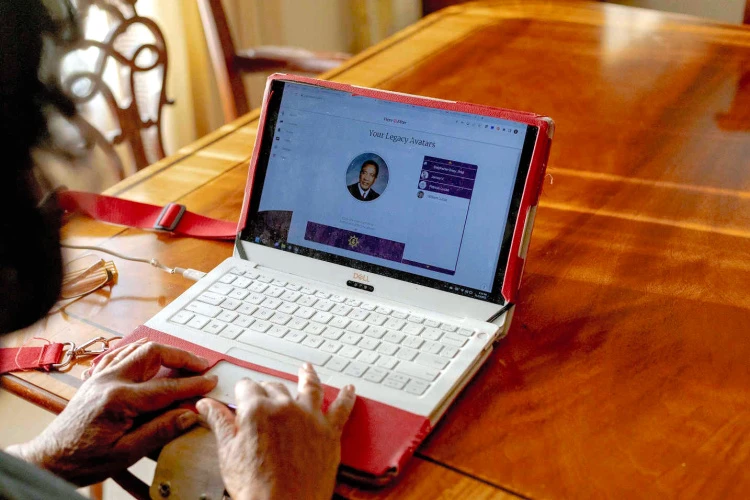
Fortunately, I’ve never had an experience needing to say goodbye, so topics of death have always felt something far away. However, Gemini has introduced me to this unbelievable topic: in the technological world, death is no longer our final end. The concept is called Grief Tech. It sounds like science fiction only in movies, but the concept is actually quite simple. Think about how “you” are online: your texts, your voice notes, favorite emojis, etc. These data will be learned by AI and capture your specific vibe ー linguistic patterns such as the way you talk, favorite phrases and emojis, emotional tone, and conversational style. These systems are based on Large Language Models (LLMs), turning individual digital traces into an interactive persona (Kurian, 2025). Once the person passes away, their family can keep “talking” to them through an app.
Several companies are already making this a reality:
- HereAfter AI: You can record your life stories while you’re healthy, and after you’re gone, your grandkids can “chat” with your voice.
- StoryFile: They create interactive videos. According to a fascinating article by Asahi Shimbun GLOBE+, a woman named Marina Smith actually “attended” her own funeral via AI. She sat on a screen at the front of the room and answered questions from the people mourning her in real-time.
My first impression of this, honestly, is “what in the world…?”
Is it healthy?
Since I’ve never had an experience dealing with this topic, the idea of being able to talk to someone who is no longer near you seemed appealing, but at the same time, I felt a sense of discomfort. First, I believe facing death is not a bad thing; all human beings die if they are born, and this is not a frightening thing. We will develop a sense of it as we live through our lives.
With these new products being developed, can we move beyond the actual fact? Grief typically follows a path toward acceptance. As we say in our language, “Time will solve,” there is a biological and emotional need to realize that a person is no longer physically present. If you are able to text someone who is not there anymore and get realistic replies, the acceptance of death will not be processed appropriately, making it harder for users to accept, affecting their emotional and psychological well-being. Moreover, if the user uses these concepts for comfort or advice, the technology could become a central emotional support, undermining autonomy and resilience, which could also lead to emotional depression. Another concern that was raised is from an ethical perspective. We spend our lives protecting our privacy, but we currently have very little control over our data once we are gone. If a grieving family member decides to upload years of your private, vulnerable messages into AI to “bring you back,” they are exposing a version of you that was never meant to be formed. As the article by Asahi points out, the real issue is permission. If a person didn’t sign up to be “reborn,” we may be violating their dignity by forcing them back into digital existence.
Many other problems are brought with this invention, but I will not dig deeply into them. I would like to conclude with my honest thoughts. I agree that this development would offer a chance to feel the past, and there I believe that there will be people who are willing to preserve themselves. However, I think it threatens the border between life and death. Connections between humans are precious because we know that we have limited time; every second we live will never happen again ー we have to face what we have in front of us.
https://thenodmag.com/content/grief-tech-artificial-intelligence-chatbots



Recent Comments