The internet can feel like this giant expanse of total freedom. Endless platforms, endless expression, endless choice. And yeah, technically, it is. But look at it this way: almost everything we do online still happens inside a system someone else designed.
Every action fits into a slot. Every ‘choice’ is basically a dropdown menu. Even chaos has rules if you zoom in far enough.
And honestly, that’s kind of exciting. Once you start seeing it, you notice patterns, little levers, ways to play. That’s where the magic shows up. Because how can we think outside the box if there isn’t a box
Take Stardew Valley. People call it an escape from structure, but the real charm is in how structure enables play. You start in Joja, the corporate sludge that wants to organize every part of your life, and then you move to Pelican Town, a calmer, friendlier system. Not freedom from rules, just rules that let you stretch and experiment.
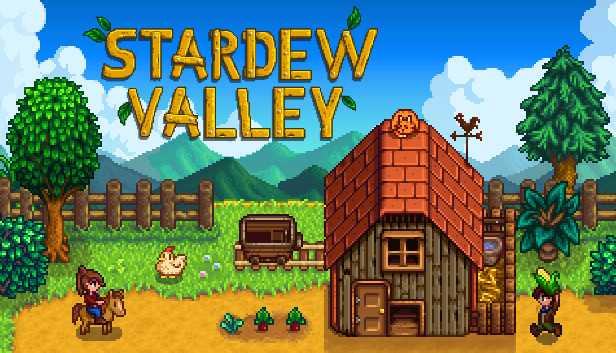
Your day ends at 2 a.m., whether you like it or not. Your energy bar isn’t negotiating. Seasons decide what grows. Festivals interrupt your plans. Villagers follow routines. Even the mine has its own rhythm. Boundaries are everywhere. And instead of feeling trapped, you feel… held. Like everything makes sense because it has shape.
Those constraints are what give your creativity weight. Planting crops feels satisfying because you can’t do everything at once. Planning your day feels rewarding because the clock is ticking. Even small actions, watering parsnips, checking in on a neighbor, carry meaning because they exist inside a system that responds to you.
Digital life works the same way. We pretend we’re free online, but we’re always playing inside the rules of platforms. The “freedom” is curated: the reaction buttons, the timeline, the way posts show up. Even memes, especially the academic ones I love, work like this. Everyone starts with the same concept or framework, and the fun comes from how creatively you bend it without breaking it. Structure isn’t a limit, it’s the playground.
Old-school internet tricks like Google bombing worked the same way. People weren’t escaping the system. They were figuring out how it worked and dancing with it. The fun came from discovering the possibilities the rules allowed.
And that’s why understanding a system makes play easier. Even a little computer knowledge, knowing how a platform nudges you, how an algorithm ranks things, how code shapes what you can do, suddenly makes the digital world feel more like a sandbox and less like a maze. You notice the edges, the patterns, the levers. You can slip sideways, try something unexpected, see what happens. It’s not about hacking. It’s about noticing how the world works so you can have more fun inside it.
Which is why systems don’t bother me the way they might bother other people. Everyone’s in one, digital systems, social systems, whatever. You can’t escape them, not really. But you can decide how creatively you move inside them. That’s where freedom lives. Not outside the frame, but in what you do with the frame.
And this is why I keep coming back to Stardew Valley. Joja flattens you. Pelican Town makes space. Neither is “totally free.” Neither promises infinite possibility. But one of them lets you breathe and experiment.
Digital playgrounds, memes, chats, forums, games, i think they work the same way. The fence is always there. But the fun is in how we decorate it, climb it, bend it, or plant something next to it and call it our own.


This is a very poetic way of looking at a system, and I like it. Understanding how something works often does make it more fun. This is also how I explain why I like math to people who don’t, there are a lot of them. Math is also a system, rules that you follow to get to an end goal. But what people don’t realise is that math can also be creative. You can make your own combinations of problems to solve complex issues and find new ways of calculating things that others might have not thought of.
I also like how you point out “the freedom is curated”. I definitely agree with you on that. In the real world freedom is also always curated. Yes, here in the west we have a lot of freedoms, but there is also law and order. This can be limiting but it keeps us safe (to an extent) and part of the system. I am not saying the system does not need fixing, but you do need to work within the system to change it.
I also play Stardew Valley and I have never looked at it this way. Connecting Stardew Valley and real life is a very nice touch. There is freedom in both the game and digital life, only within the box of the creators. You can try to disrupt the game or your own algorithm, but it’s just going to end up creating different routes that must have been accounted for within the box.