
Restoring my Relationship to the Digital World (Part 4)
If you have been reading my blogs over the past weeks, you might have noticed that I keep coming back to the same thought: technology itself is neutral. It doesn’t arrive in the world as a destructive force, it becomes one through it’s user.
For my last blog, I want to conclude with a technology that mirrors this human power in its darkest but also (as I have come to realise) most hopeful forms, one I often find myself wanting to look away from.
The Drone.
The Killer Drone
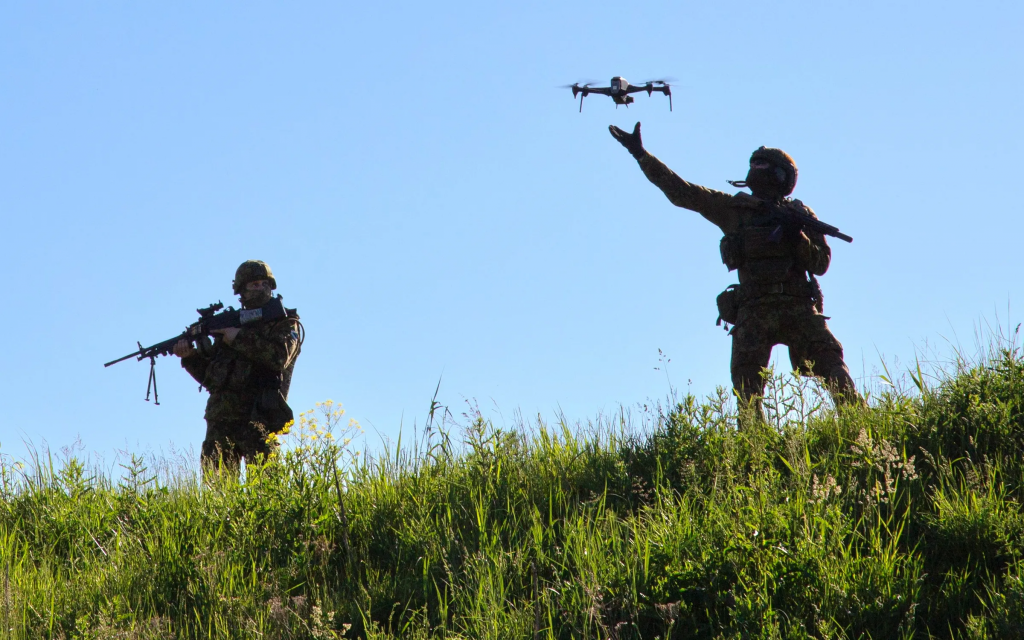
I dont know when exactly the term “killer drone” first entered my everyday awareness, but I know that it’s there now, constantly. It shows up in news headlines, in short clips on social media, in conversations about Ukraine that feel uncomfortably close at times.
A few weeks ago, I attended a talk by someone who builds drones for the Ukranian military. Sitting there, listening to him describe what these machines can do, I felt that familiar anxiety rise up in my chest. He spoke about AI-assisted targeting, about drones that can identify people, recognise unfamiliar objects, and turn entire places into rubble within seconds. The way he talked about it was factual, almost calm. As if he were explaining a software update and not an object that fully changed the game of human violence.
However, what struck me most wasn’t just the violence, but the removal of it. Drone warfare removes the body from the battlefield. You don’t hear screams, you don’t feel impact, you don’t smell smoke or blood. You click a button. Somewhere else, someone seizes to exist.
It’s impossible not to think about video games here. The same mechanics. The same gestures. The same sense distance to reality. Drone wars risk stripping violence of its weight, its messiness, its humanity. The speed, precision and so called “cleanliness” of these attacks can make them feel efficient, even necessary, while quielty detaching those in control from the human cost of their decisions.
This is where the concept of the neutrality of technologies becomes uncomfortable. Because killer drones don’t invent cruelty. They amplify it. They take exisiting power structures, existing conflicts and make them faster, sharper and more devastating.
The Savior Drone
And yet, this is not the whole story, it never is.
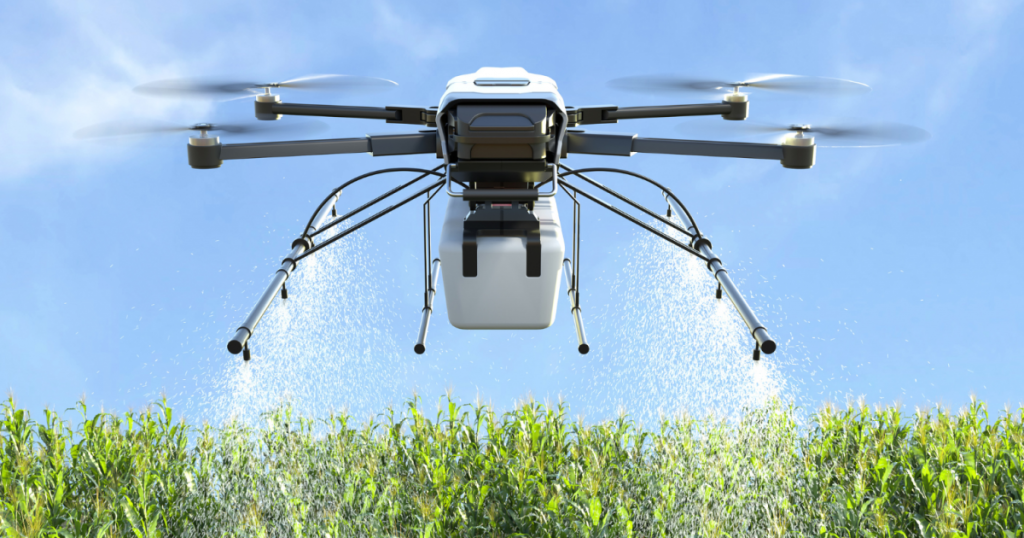
The same technology that makes my stomach turn merely by thinking of it, is also quietly saving lives in places that need it the most. Drones deliver medical supplies to villages cut off by floods or war. They transport vaccines where roads no longer exist. They enter disaster zones that are too dangerous for humans, mapping destruction so help can arrive faster.
Environmental drones track endangered species, monitor deforestation and map ecosystems, that were once impossible to observe without enormous cost. In agriculture, drones help farmers understand their land better, reduce waste and increase yields with fewer resources. Some are even used to reduce traffic congestion and lower carbon emissions.
The same device. A different intention.
That’s what makes drones so fascinating. They force us to confront the fact that technology doesn’t come with morals attached, we supply those ourselves.
To Conclude
Looking back across all my blogs, this duality feels familiar. Social media can connect or isolate us, AI can serve as a tool or fully mislead you. Drones can rescue or destroy.
Technology is not inherently good or bad. It is a mirror that reflects what we value, what we prioritize and what we are willing to ignore.
Understanding digital technology this way is uncomfortable because it removes the easy scapegoat. We can’t just say “technology is ruining everything” and move on. Seeing it as neutral demands responsibility. It asks us to stay engaged, to question who is using these tools, for what purpose, and at whose expense.
What I’ve learned throughout writing these blogs and what I hope you take with you, is that restoring a healthier relationship with the digital world doesn’t mean turning away from it completely. It means changing how we look at it.
The approach I slowly developed for myself looks something like this:
- Seeing technologies as neutral tools
- Acknowledging their real dangers and negative effects
- And then, most importantly, imagining the best versions of what they could be, and choosing to engage with them from there.
By exploring technologies from multiple perspectives, by asking who they serve and how they serve, we regain a sense of agency. We stop being passive consumers of fear and start becoming active participants in shaping what these tools could become.
The drone reminds me that the future is not predetermined by innovation alone. It is determined by the choices we make with it. Whether the technologies we create end up harming us, or helping us, depends on whether we are willing to look at them honestly, critically and responsibly.
And maybe that’s the real work of restoring my relationship with the digital world: not looking away, but learning how to look differently.
Sources
https://www.bbc.com/news/uk-46829931
https://dronesaferegister.org.uk/blog/amazing-drone-uav-uses


Great blog, and I completely agree that technology is not bad, it is just used badly by certain people. Even if you don’t look at all drones, but purely killer drones: some may be used to stop someone planning to start a school shooting, for example. People are the problem, and unfortunately this is probably the case with practically everything that has positive- and negative effects.
By the way, you missed one important cool thing you can do with drones, something my dad does basically every holiday we go on: buy a drone at the airport to make ‘sick content!’ and then fly it into the ocean or a thick forest, never to be retrieved again!! Love that.
It’s actually bizarre what kind of impact all this technology has in this era. While you want to develop something good, you’re actually also creating a weapon. There are so many different applications for drones. I remember playing with drones when I was younger. You could fly them around and take beautiful videos from the air. But people always try to abuse them in some way. Later, it suddenly became a big issue that you were no longer allowed to fly them over people’s gardens or similar areas because it violated their privacy. Everything that started out so innocently always ends up being taken to the other extreme by a number of people.
I also found it remarkable that drones were indeed also made to help people. But then, by using the same technology for other applications, they were also used as a kind of killing machine. This is actually a bit like the development of weapons in general, because then you have the same ethical question: Who are the killers? The designers of the weapons or the people who use the weapons to kill people? This issue will always remain a difficult one, and I think that drones are actually taking over this issue in recent years, because they are essentially replacing the weapons of the past.