
Let’s face it, most of us need to find a job after university. This is my last semester, and after it, I’ll have a degree in International Studies. My degree is a double-edged sword: on one side, I’m a generalist, which gives me a wide range of job opportunities; on the other, it lacks focus. I bring up this topic because I’ve recently polished my CV and started looking for job listings on LinkedIn. I’ve realized how deeply the digital world is intertwined with the job market, but there’s a twist at the end of this blog.
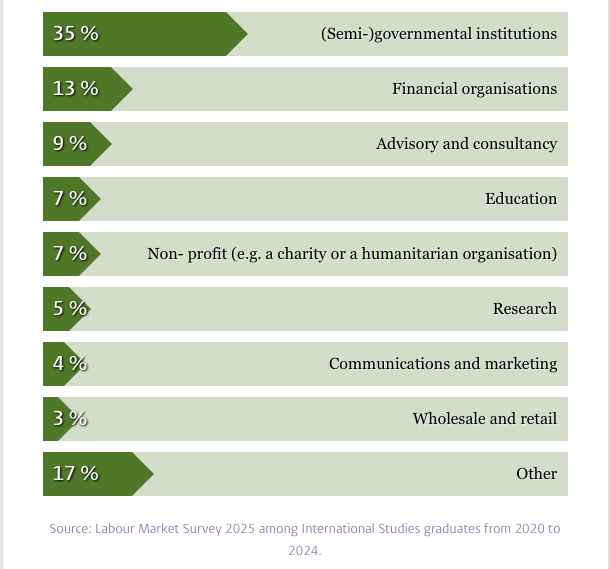
Here are some statistics given by Leiden University that outline what kind of jobs people with International Studies do:
The Digital CV:
Creating my CV was a funny exercise that made me realize the informal and implicit rules that need to be followed when writing one. One very important thing is to apparently leave as little white space as possible, according to my Computer Science major friend Michelle. Michelle gave me many other tips, such as using action words to describe tasks, including relevant projects from my studies, and removing my profile section to “let your experience speak for itself.” I’m reducing myself to my “useful” traits, which is an interesting way to see yourself.
I think as you advance further in life, you start seeing yourself more through this lens of “usefulness,” “job,” or “employment.” It’s always funny to talk to my brother, who works in a trade; one of his dominant ways of seeing me and others is in terms of job prospects.
A small story about my brother: when he was still doing his master’s in financial engineering, he would apply to more than fifty jobs within just two or three months, with most of them never responding. I don’t know how it used to be back in the day, but digital technology has made it possible to apply to hundreds of jobs all around the world.
LinkedIn and Ghost Jobs:
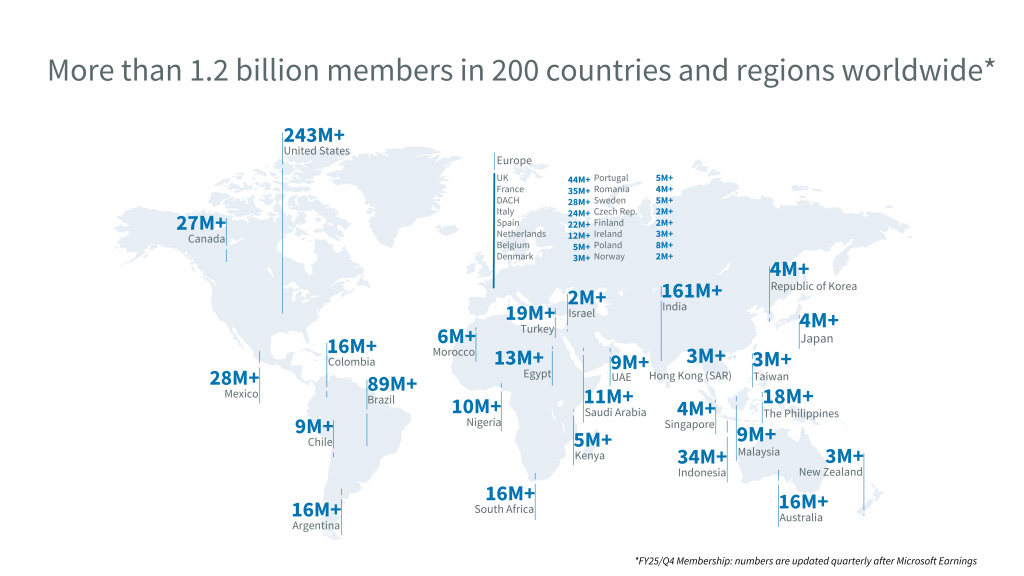
LinkedIn has more than 1 billion users in 2025, and is still consistently growing at a fast rate. Never before were so many job seekers on one centralised platform. One worrying thing on LinkedIn is the number of fake jobs, or “ghost jobs,” which are job postings that employers do not intend to fill. They do this for two main reasons: first, to see what kind of talent they could possibly attract, and second, to put pressure on current employees by making them fear being replaced.
An American tech worker name Eric Thompson got laid off and discovered the rampant number of ghost jobs online. Now, he is trying to get legislation passed they call it “Truth in Job Advertising and Accountability Act” (TJAAA), to make this practice illegal.
In Europe, on the 7th of June 2026, EU countries need to sign these conditions into their national law:
- Disclose starting salary or range in Job ads
- Bans asking salary history
- Strengthen gender-pay-equity rules.
Though this does not address ghost jobs in Europe, and maybe it should be passed.
The Twist
Despite all the digital infrastructure, some companies still require a physical application. The internship my brother send on LinkedIn requires my CV and cover letter be sent to Washington DC per mail. Didn’t expect that!



Thank you for sharing your thoughts. I’ve learned a lot, especially about the differences between the European job market and North America. I feel the same way as you. In Canada, most companies require you to provide a portfolio or LinkedIn URL. Even though I’ve been searching for jobs here for the past few months, the job market has been really tough, and I still haven’t found anything yet.
During my search, I’ve received many messages in my inbox from people claiming they have job opportunities and are interested in me, but they turned out to be scams. I’ve experienced this multiple times now, and honestly, it’s made me trust LinkedIn less.
This was one of the most relatable blogs ever… especially the part about shaping your CV to fit these unspoken digital rules. It’s funny how making a CV turns you into the most “efficient” version of yourselfd, like you’re editing your identity just to fit into a job description.
The whole thing about LinkedIn and ghost jobs is sooo spot on. It’s so wild how easy it is to apply to dozens of jobs now, personally I once applied for over 25 jobs in a span of two weeks…
And that twist at the end made me laugh. After all the digital systems and online platforms, you still end up sending a physical letter across the ocean. Some companies really live both in 2025 and 1987 at the same time
I feel quite related to what you described in this blog. I always find writing a CV somewhat absurd, as it seems that you have to compress your life into one page. In this kind of document, who I am appears to be the most irrelevant part, while why I am – or at least why I am trying to become a cog in a bigger machine – matters more. I would say this is the tragedy of modern life. As the machine itself is made up of human, the people wo read your cv is human, the people interview you is human, the people hiring you is human – why does the process still feel as though something distinctly human is lost along the way? Sending your cv across the ocean is, at the very least, something that sounds romantic!