
As a teenager I had several moments where I had to babysit little kids, which I’ve always enjoyed, because I’ve always been told that I am very good at taking care of kids. Living in a family with multiple older brothers, I never really needed a babysitter, so as a teen I aspired to be like an older sibling to other kids. But as I began having more and more moments where I had to take care of kids, I started realizing how they stopped needing entertainment from other human beings, and more from their electronic devices. At one point I felt useless being hired as a babysitter, since I would just spend hours watching kids playing or watching videos on their ipads. Games that I believed were fun for kids to play were not entertaining the kids anymore, and they would grow more impatient by the minute if they were not allowed to use their devices. I felt like I was dealing with children going through an addiction withdrawal, which saddens me til this day. I started questioning how much this would affect their creativity skills. Would children be able to use their imagination if they have everything they could possibly imagine on a screen?
When making the podcast for this class, my group and I talked about Online Identities which we had talked about in the previous lecture. In the MED Podcast, we went deeper into Goffman’s theory of presenting oneself to others and how that is seen in social media and online identities. We also talked about the fact that we create a different identity online than the one that we live with in reality. In many ways, I believe that our real identity bases itself off of our surroundings, but also what we learn when growing up. That’s why I believe that if a child doesn’t get to experience reality for how it is, they won’t be able to navigate it easily. Nowadays kids not only learn at a young age that online realities and identities exist, but they also start participating in them. By allowing the immersion of children into these realities at a young age, are we affecting their real identities? I decided to look into this and find answers for my questions, and try and understand if kids are truly losing their spark.
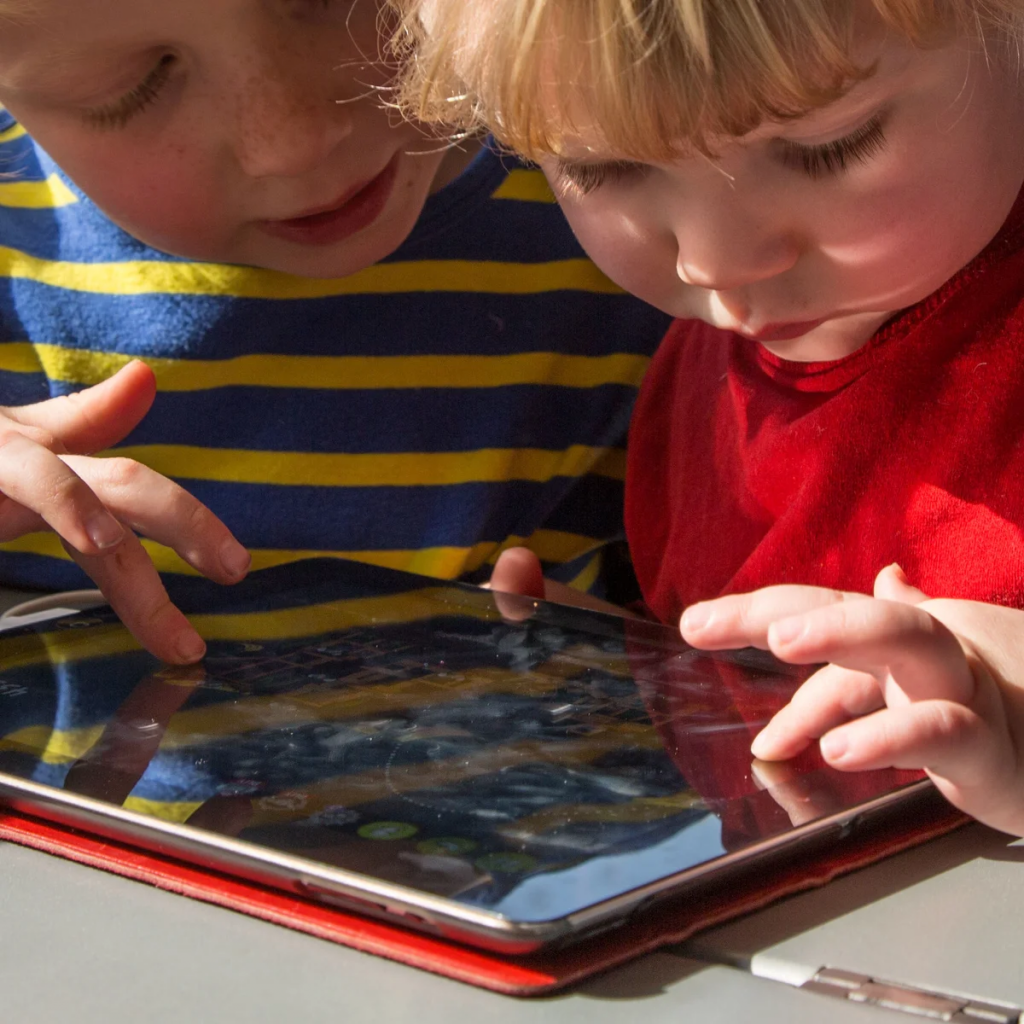
Is Technology Affecting Children’s Creative Skills?
Before discussing this, it is important to talk about creativity, and to what extent should children be considered inherently creative. Creativity can be reflected upon in multiple ways, and many different fields have ways for describing it, but in the article First Discoverers bring forth experts Beverley Barnaby and Victoria Burghardt who say that creativity is made up of 4 essential characteristics: divergent thinking, innovation, original and flexible thought, and exploration of ideas. Of course, it is rare for children to be capable of obtaining original thoughts, or ideas that are rich in value for that matter. First Discoverers also mentions how creativity theorist Robert Stenberg believes that for a child to be creative “it is only necessary to show the notion is new for that individual – which is why he tends to use the term ‘novelty’ rather than originality”. So even if children might not develop original ideas, the process of developing novelties for themselves is already substantially creative for a developing child. Most of the time kids are capable of this through imitating actions and behaviours of people that surround them: usually from their parents, siblings, teachers or other kids. Being that technology is now integrated in the way we work as a society, children start wanting to imitate what adults do, which many times results in using technological devices. As a result, many kids start using devices at an early age, as a way for parents to deal with their children, which consequently gives them a new perspective for imitation. Kids start learning how to be creative through what they see on their screens; whether that means they learn how to count with Peppa Pig, or how to shoot a gun through a video game. However, the line between what will actually help them in real life and won’t is very little, something that when seen through those around you, might be more useful for the quotidian of a human being.
Is Technology Affecting Children’s Real Identities?
Consequently to children using more and more technology also is the concept of them connecting less and less with reality. When allowing children to use devices, we are allowing them to surf through a wildly complex concept in our society, which is the internet. Whether it is just to play games, or to have their own social media, they start understanding that there is a world where they can exist within the real one. A world where societal norms might not reflect those to reality, allowing for them to act freely with little to no consequences. A world where if they don’t want to see or do something, they don’t need to learn how to deal with it since they can just move on, or delete, or go backwards. A world where certain behaviours are allowed where in reality might not be, such as bullying, cursing, abuse, or plain violence. By placing children into these worlds at a young age, where they learn to explore and be innovative through imitation, they start building their realities based on the identities that they created online. Can’t this also happen to adults? Of course, but adults have the capability of creating boundaries between these concepts if they wanted to, something children have yet to understand how to do when growing up. These identities might merge, causing the lines between reality and fantasy to blur, and allowing for actions and behaviours that might not connect with the real world the way they do online.
So, what now?
Based on this, I believe that children might somewhat be losing the “spark” of being children; making mistakes, learning from them, understanding boundaries, and creating novelties based on what they see around them. However, I don’t believe that this is permanent, or that technology is inherently evil. The internet is capable of being a great tool to help children enhance their skills and develop their brains, but as First Discoverers put it “Above all, there needs to be a good balance of active, social and creative elements to avoid any risk of slipping into an unhealthy, sedentary lifestyle.”


This is a really interesting blog to read, because I am always thinking about the same questions. If children nowadays cannot experience the uncertainty of dealing with the real world, the loneliness of connecting oneself, or the quiet boredom of imagination, then adulthood arrives already rehearsed, but never truly inhabited. However, I also realise that this sounds like a judgement—that only pain can lead to a spark. But I believe that only a certain amount of not being fulfilled, or not being happy, can make receiving something feel like a precious gift. Just like if you eat candy every day, you will eventually lose the perception of sweetness. That could also just be me – maybe it is best to keep children happy for as long as they can, before facing a world that inevitably disappoint them.
Very nice blog to read. I often have this question on my mind and comparing myself with the younger generation I can see the difference between growing up in nature and in front of a device. I agree with the idea that technology is not evil and that it brings many tools to improve our life, however I feel sad for children that spent their childhood with videogames instead of outside. I feel like the development in technology, while improving part of our lives is producing societal fear and unhappiness.