
“We are all consciously or unconsciously adapting ourselves to a single common world.”1
-H.G. Wells
One of my favorite moments ever, or at least one of the funniest, happened to me recently… I was on vacation with one of my good friends, myself from the US and her from India (we had met each other in the Netherlands). We were hiking though the mountains in Scotland, and came across some ducks. Immediately my brain thought of “The Duck Song,”2 and I couldn’t help myself, I just began singing it… “a duck walked up to a lemonade stand….” I never expected that she would recognize this song, as it was a strange part of my childhood, yet to my surprise she caught on and began to sing with me. We wandered laughing and singing this song, from a YouTube video in 2009, which had somehow made its way into both of our lives.
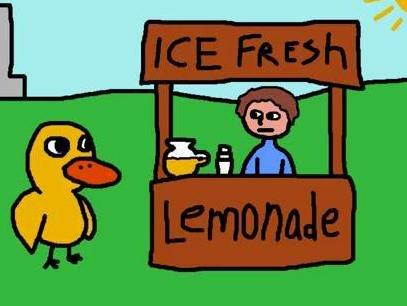
It seems crazy to say, but this truly was the moment that the state of globalization in our world truly hit me. Inklings of how globalized our world is had really started to reach me since I started studying abroad, and it was always a bit of a cool surprise when someone had watched the same movies or TV shows as me, when we had grown up separated by oceans for almost two decades of our life. Or when the same popular songs I had listened to and screamed my whole life were played in the club, and people from all around the world would sing it with me. But for some reason it was this singing of the Duck Song, a niche cultural memory in my life, where honestly I just remember annoying 5th grade boys singing this on repeat, that really hit me about the state of our cultural globalization.
Collective Cultural Memory and World Brain
It made me think about H.G. Wells World Brain, and I began to believe that his ideas from the 1930s have become prevalent not just in the academic field as he had hoped, but in our collective cultural memory as humans as well. He spoke in very stressed terms about the state of the world, and also what this globalization could mean, and I think many of his ideas do transfer to the crazy state of cultural globalization we have reached today.
“Now the consequences of this change of scale force themselves upon our attention everywhere. Often in the rudest fashion.”3
Wells spoke about the consequences of this globalization in a negative way, worried about the ‘rudest’ way in which these changes could impact us. He both believed that it was necessary to share knowledge and work together, and at the same time was worried for how the future looked, with how much power we now held as different nations. There is much to be said for the possible negativity that globalization has created, the speed at which we can travel, and also be violent, however I want to focus on the fascinating positive things that it has created.
“An immense and ever increasing wealth of knowledge is scattered about the world today, a wealth of knowledge and suggestion that – systematically ordered and generally disseminated- would probably give this giant vision and direction and suffice to solve all the mighty difficulties of our age, but that knowledge is still dispersed, unorganized, impotent in the face of adventurous violence and mass excitement.”4
Since the 30s when Wells wrote, it is clear that this ‘wealth of knowledge’ has been ordered greatly with the invention of the internet and world wide web. What I don’t think he predicted is how this spans further to the culture of our world. He saw the world brain as an educational tool, something necessary in the interwar period which could help the world move forward and share what it was learning, and hopefully avoid further violence. I do think his idea was realized. Just the other day I sat in a lecture about astronomy and its developments, and the professor spoke to me about how the university here in the Netherlands was partnering with people in Chile to build the next big telescope. Clearly this exchange of knowledge over space is well underway.
Today, that same exchange also houses things such as the Duck Song and Disney channel. So much of culture is no longer region specific. American TV, or wider cultural ideas , are a part of everyone’s minds it seems. It is very rare that I make a reference and no one in the room understands what it means, even though I find myself in many rooms where the population of people is from any number of places across the globe. Not only do academics share their knowledge with each other across the world, now young minds are equally connected.
Is this a new phenomenon?
This experience made me question how new this feeling of collective cultural memory is, and I reached out to my mother and father who also grew up moving around the world their whole lives. I wondered if they felt this same idea of globalization from such a young age as I do?
The easiest comparison to draw was with music. Both parents felt very much that they heard the same popular music wherever they went, and especially that the top 10 America songs at the time would be played wherever they found themselves. The top German songs from 1980-80 included both Nena’s “99 Luftballons” along with Micheal Jackson’s “Billie Jean.”5 Really the same went for popular TV and movies, Dallas, Fall Guy, Dynasty all retained mass popularity in Germany, while all being American shows. Maybe it was slightly less widespread, but the main TV shows again were mostly shared among all their peers. For my dad, the main difference was when he was really young in Germany, the popular shows could still be watched but just always in the German format, leading him to not even know what were American shows and which ones were German. Cultural items were being exchanged and impacting youths around the world at that time still, showing that this trend has been a long time coming.
Bringing it all Together
Overall then, this globalization that Wells really hoped for with the World Brain, has been realized and expanded to collective cultural knowledge. This is not necessarily a super new phenomenon, it has now impacted at least two generations of people growing up, but it now spans to more niche or smaller scale cultural items. While an esteemed movie being seen worldwide is still quite impressive, same as the most popular song, now even small YouTube videos about ducks walking to lemonade stand can bring together kids who grew up separated by multiple oceans! Now that we have moved to a world where even the ‘smallest’ cultural items can become globalized cultural items, is there any further that we can go, or have we reached the limit?
- H.G. Wells, World Brain, 41. ↩︎
- Bryant Oden, “The Duck Song,” Song, January 2009, YouTube,https://youtu.be/sHi6LCx6Lx8?si=EUn1pxobpBcyj5Ul. ↩︎
- H.G. Wells, World Brain, 41. ↩︎
- H.G. Wells, World Brain, 67. ↩︎
Sources:
Wells, H.G. “The Brain Organization of the Modern World,” in World Brain, 1939, 39-80.
Oden, Bryant. “The Duck Song.” Song, January 21, 2009. Youtube, https://youtu.be/sHi6LCx6Lx8?si=EUn1pxobpBcyj5Ul.
Wolfgangroehl. “Die TOP Charts der deutschen Hitlisten- 1980-1989.” Accessed October 20, 2025. https://www.wolfgangroehl.de/topcharts-1980-1989.htm.



The reason I clicked on this blog was because I in fact also know The Duck Song. I think it is indeed quite funny how we tend to think we are the only ones knowing of a digital phenomenon. I experience this a lot with songs. I don’t really have a gauge of what songs are popular globally and end up asking my friends from different countries if they know a song that apparently is very well known. Something that I thought was an individual experience turns into a collective one and this can be delightful! 😀
Your Duck Song story made me laugh, but also, are we actually solving cultural differences with a random YouTube video? Being ‘born digital’, it’s wild to think that tiny, silly things like this can exist in multiple people’s memories across the world. Maybe these random shared moments are quietly becoming the weird new glue of global culture, and somehow even something as small as a duck at a lemonade stand can make Wells’ World Brain feel real.
To be honest, I was drawn in by the title, the Duck Song is quite amusing! I really like the perspective of your blog post: how a simple nursery rhyme reflects cultural globalization. I’ve always believed that this seemingly grand topic is often most vividly revealed in the details, a view that has grown stronger since I began studying abroad. Different countries and regions have distinct cultural backgrounds, social structures, and ideological dynamics, so cultural exchange is not about assimilation or homogenization, nor should it pursue a uniform standard. Instead, it should be about appreciation under the premise of mutual respect. The tangible expression of cultural exchange often lies in humanity’s most fundamental pursuits—we uphold justice, protect the vulnerable, and seek peace. This is why a nursery rhyme can travel across oceans, allowing children thousands of miles apart to share the same joy. In today’s digital media era, we have more opportunities for exchange, and technology helps us overcome many barriers. I believe this is less about whether it’s an opportunity or a challenge, and more about entering a new phase of civilizational dialogue. What matters most now is to “open our eyes to the world”, to see the true face of distant cultures rather than clinging to stereotypes or blindly trusting the rhetoric of politicians.The essence of any civilization lies in its people, and social media offers a valuable opportunity to learn about others. Of course, this process may involve moments of misunderstanding or even offense, but that’s okay. What truly matters is keeping our eyes and minds open.